
Introduction: The High Stakes of Moving Valuables
Moving day is stressful enough—but when you have high-value items such as fine jewelry, rare collectibles, artwork, or sensitive electronics, the stakes are even higher. The risk of damage, theft, or loss increases during the chaos of relocation, making it critical to plan and execute every step with precision. Unlike everyday household goods, valuables require special attention: the right packing materials, customized handling, proper documentation, and tailored insurance coverage. Whether you’re a seasoned collector or just want to ensure your family heirlooms survive the journey, understanding the unique challenges of moving valuable possessions can save you not only money but also heartache.
This guide distills expert strategies for safeguarding your prized possessions from start to finish. We’ll cover how to identify which items require extra care, select optimal packing solutions, leverage specialized moving services, document your assets, navigate insurance options, and ensure secure transport. With practical tips drawn from professional movers and insurance specialists, you’ll have the confidence to relocate your treasures safely, no matter the distance or destination.
Identifying Your Valuables and High-Value Items
What Qualifies as a “Valuable”?
Before you start packing, compile a comprehensive inventory of your high-value items. These typically include:
- Jewelry and Watches: Engagement rings, luxury watches, antique pieces
- Fine Art and Antiques: Paintings, sculptures, vintage furniture, rare books
- Collectibles: Coins, stamps, sports memorabilia, comic books
- Electronics: High-end computers, cameras, audio equipment
- Important Documents: Passports, deeds, certificates, financial records
- Heirlooms: Family keepsakes, photo albums, inherited items
- Luxury Goods: Designer handbags, shoes, fashion accessories
Anything with significant monetary or sentimental value should be considered for special handling.
Creating a Detailed Inventory
- Photograph Each Item: Capture multiple angles and any identifying marks or serial numbers.
- Document Descriptions: Note make, model, provenance, and condition.
- Appraisals: Secure recent appraisals for art, antiques, and jewelry.
- Store Digitally and Physically: Keep copies of your inventory in the cloud and as hard copies for easy access.
Packing Valuables: Professional Techniques
Choosing the Right Packing Materials
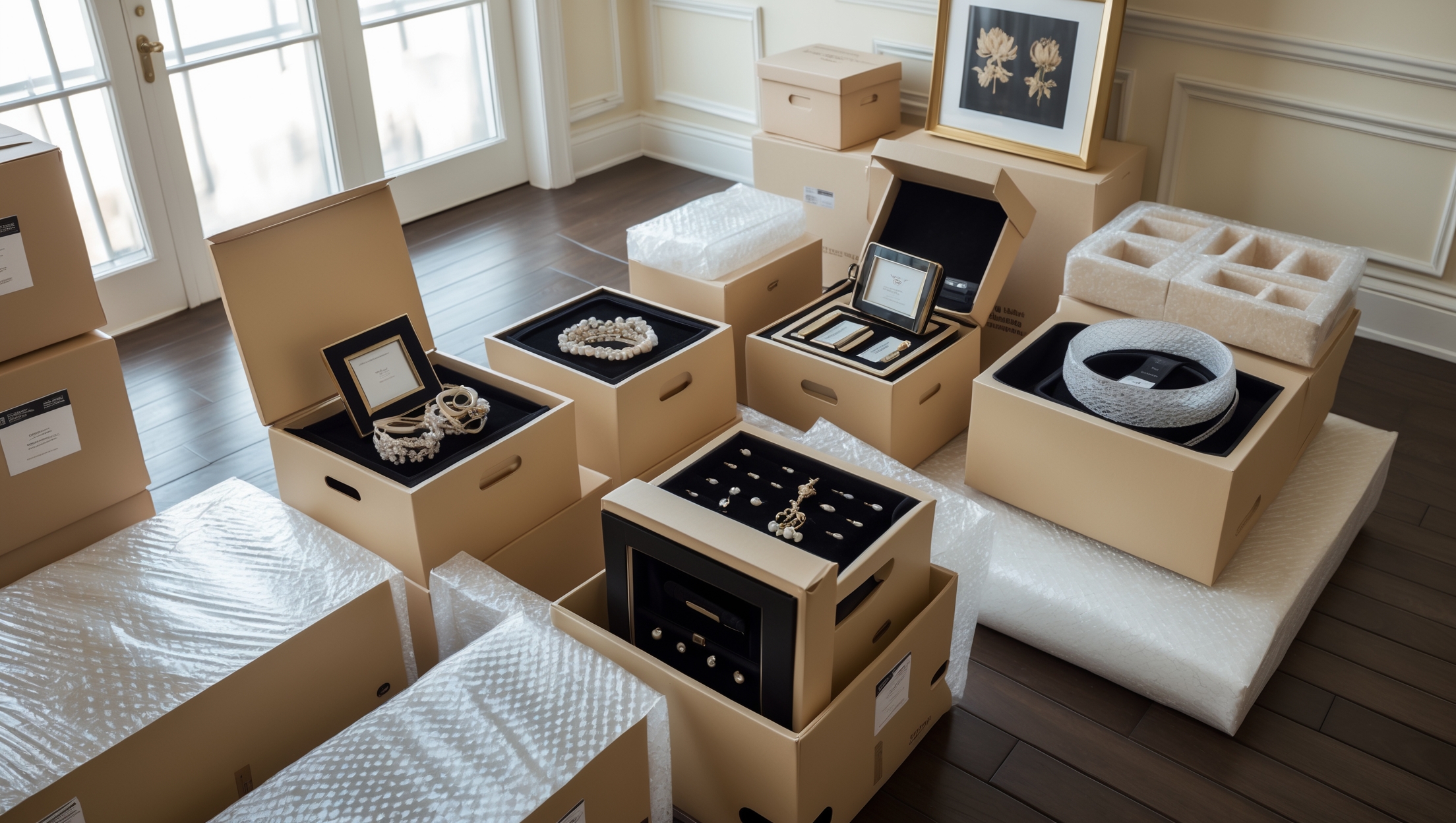
- Jewelry: Use padded jewelry boxes, anti-tarnish cloths, and small zippered bags. Place inside a lockable, hard-sided container.
- Artwork: Acid-free tissue, glassine paper for paintings, custom foam corners, and wooden crates for large pieces.
- Collectibles: Original boxes when possible, or custom-fit foam inserts and rigid containers.
- Electronics: Anti-static bubble wrap, original packaging, foam padding, and strong double-walled boxes.
- Documents: Waterproof, fire-resistant lockboxes or document bags.
Expert Packing Steps
- Layering: Place soft padding at the bottom, wrap each item individually, and add cushioning layers between items.
- Securing: Prevent movement within boxes using foam inserts or air pillows.
- Double Boxing: For extremely fragile or high-value items, place the packed box inside a larger box with additional padding.
- Sealing: Use heavy-duty packing tape. Clearly label boxes as “Fragile”—but avoid indicating contents to deter theft.
- Climate Considerations: For delicate artwork and electronics, use materials that protect against humidity and temperature changes.
Specialized Moving Services
Hiring Professional Movers for High-Value Items
Not all moving companies are equipped to handle valuables. Look for movers who offer:
- Specialized Training: Staff trained in handling art, antiques, and electronics.
- Custom Crating: On-site fabrication of wooden crates for artwork and sculptures.
- White-Glove Service: Temperature-controlled vehicles, GPS tracking, and discreet handling.
- Inventory Management: Barcode tracking and digital inventory systems.
Courier and Secure Transport Options
- Armored Transport: For extremely high-value items (e.g., rare coins, fine jewelry), consider armored courier services.
- Direct Delivery: Avoid consolidating valuable shipments with general household goods—request direct point-to-point delivery.
- Personal Transport: When feasible, carry the most irreplaceable items with you in person.
Insuring Your Valuables
Understanding Insurance Options
- Homeowners/Renters Insurance: May cover some items, but usually with strict limits and exclusions during transit.
- Moving Company Insurance: Standard coverage (released value protection) is minimal; upgrade to full-value protection for high-value shipments.
- Specialized Valuables Coverage: Consider standalone policies for art, jewelry, and collectibles—especially if moving internationally or storing items in transit.
Filing and Documenting Claims
- Pre-Move Appraisals: Ensure all appraisals are up to date and filed with your insurance provider.
- Inventory Documentation: Attach photos, serial numbers, and purchase receipts to insurance records.
- Understand Exclusions: Read the fine print—some policies exclude damage from improper packing or certain types of transit.
- Proof of Condition: Take date-stamped photos immediately before packing and upon arrival.
Logistics and Security During the Move
Best Practices for Handling on Moving Day
- Minimize Exposure: Keep valuables out of sight from movers and neighbors.
- Separate Transport: If possible, use a dedicated vehicle for high-value items.
- Supervision: Designate a trusted person to oversee loading and unloading of valuable items.
- Lockboxes and Safes: Use portable safes for small, especially valuable items.
- Secure Vehicle Stops: Avoid overnight storage in vehicles. If unavoidable, park in secure, well-lit locations and consider portable alarms.
Storage Considerations
- Climate-Controlled Units: Mandatory for artwork, antiques, and sensitive electronics.
- Security Features: Choose storage with 24/7 surveillance, restricted access, and individual alarms.
- Short-Term vs. Long-Term: For longer storage, invest in desiccant packs, pest barriers, and insurance tailored to stored valuables.
International Moves: Extra Precautions
Customs and Regulatory Compliance
- Export/Import Restrictions: Research regulations on moving art, antiques, and precious metals—some countries require permits or proof of provenance.
- Documentation: Carry copies of purchase receipts, appraisals, and customs forms.
- Declared Value: Accurately declare the value of each item to avoid confiscation or fines.
Transporting Valuables Abroad
- Professional Art Shippers: For museum-grade items, use international art logistics firms with climate-controlled air freight and bonded warehouses.
- Travel Insurance: If carrying valuables as personal luggage, ensure your travel insurance covers high-value items.
- Backup Documentation: Store digital backups of all paperwork in secure, cloud-based storage accessible from anywhere.
Unpacking and Setting Up: Protecting Valuables in Your New Space
Careful Unpacking
- Inventory Check: Cross-reference each item with your inventory as you unpack.
- Immediate Inspection: Inspect for damage and photograph items as soon as boxes are opened.
- Reporting Issues: Notify your moving company and insurer of any issues promptly—most claims have strict deadlines.
Securing in the New Home
- Install Security: Prioritize installation of alarm systems, safes, and surveillance cameras.
- Climate Control: Set up humidifiers/dehumidifiers for art and antiques as needed.
- Display and Storage: Use locked display cases for collectibles and secure drawers for jewelry.
Expert Tips for a Stress-Free Move
- Schedule Early: Book specialized movers well in advance, especially for rare or irreplaceable items.
- Don’t Advertise: Avoid posting about your valuables or moving plans on social media until after the move.
- Ask for References: Always check the credentials and references of any company handling your valuables.
- Practice Discretion: Only share details of your high-value inventory with trusted professionals on a need-to-know basis.
Conclusion: Moving Valuables with Confidence
Relocating your most treasured possessions doesn’t have to be a nerve-wracking ordeal. By taking a proactive, detail-oriented approach—beginning with a thorough inventory and ending with secure placement in your new home—you dramatically reduce the risks of loss and damage. The right packing materials, specialized moving services, comprehensive insurance, and vigilant oversight form a robust safety net around your valuables. Remember: the true value of your cherished items isn’t just in their price tags, but in the memories, history, and meaning they hold. Investing time and resources in their protection is always worthwhile.
Even if you’re handling a local move, don’t cut corners when it comes to high-value items. Consult with professionals, read the fine print on insurance, and never underestimate the value of discretion. With these expert strategies, you can focus on the excitement of your new chapter, confident that your valuables are in good hands. Whether you’re an avid collector, art enthusiast, or simply safeguarding family heirlooms, following these best practices will help ensure your treasures arrive safely and ready to enrich your new home.
Could you clarify what kind of documentation is considered sufficient for insuring collectibles and fine art during a move? Would photos and appraisals be enough, or do insurance companies require something more formal?
For insuring collectibles and fine art during a move, most insurance companies require detailed photos and recent appraisals from qualified professionals. In some cases, a formal written inventory and proof of purchase are also needed. It’s best to check with your insurer to confirm their specific documentation requirements.
When it comes to insuring high-value items like rare coins or artwork during a move, do most homeowner policies cover this or should I look into separate moving insurance?
Most standard homeowner policies have limits on coverage for high-value items like rare coins or artwork, especially during a move. It’s wise to review your policy and consider separate moving insurance or a specific rider to ensure your valuables are fully protected in transit.
If I’m packing expensive electronics like computers and cameras, does the article suggest any specific materials or packing techniques that work best for preventing damage during a move?
The article recommends using sturdy, well-padded boxes and anti-static bubble wrap for electronics like computers and cameras. It suggests wrapping each item individually, cushioning all sides, and filling empty spaces with foam or packing peanuts to prevent movement. Keeping original packaging, if available, is also highlighted as a top option.
You mention specialized moving services for valuables like jewelry and fine art. How do I verify if a moving company is actually experienced with these kinds of items or just claiming it for marketing?
To check if a moving company is truly experienced with valuables, ask for references from past clients with similar items, request proof of insurance specific to high-value goods, and inquire about the training their staff receives. You can also see if they’re affiliated with reputable art or jewelry transport associations.
What are some budget-friendly packing solutions for valuables like family heirlooms and luxury handbags if I can’t afford custom moving services?
You can use sturdy cardboard boxes and reinforce them with extra packing tape for strength. Wrap valuables in soft materials like towels, scarves, or clothing for padding. Place items in the center of boxes, surrounded by crumpled paper or bubble wrap if available. Label boxes as ‘fragile’ and keep them with you during the move if possible.
Could you clarify what type of insurance is best for important documents or family heirlooms during a move? The article mentioned tailored insurance, but is standard moving insurance ever enough for these kinds of items?
For important documents and family heirlooms, standard moving insurance usually doesn’t provide sufficient coverage, as it often pays by weight rather than actual value. Tailored insurance, such as declared value or full-value protection, is much better since it insures items based on their true worth. It’s a good idea to discuss your specific items with your insurance provider to ensure adequate protection.
If I have a few valuable items mixed in with regular household stuff, is it better to use a specialized moving service just for those valuables, or can I pack and transport them separately on my own?
If your valuable items are particularly fragile, irreplaceable, or extremely valuable, using a specialized moving service is safest since they offer expertise and insurance. However, for a few smaller valuables, many people prefer to pack and transport them personally for added peace of mind. Assess your comfort level and the specific value of each item before deciding.
If I’m moving out of state and have several heirlooms and important documents, do you think it’s safer to transport those myself or trust a specialized moving service with those items?
For especially valuable or irreplaceable heirlooms and important documents, many people prefer to transport them personally to maintain control and peace of mind. However, specialized moving services can safely handle high-value items if you choose a reputable company with proper insurance and experience. You might consider carrying smaller items yourself and using experts for larger or more fragile valuables.
How do you recommend documenting valuables like rare collectibles before a move? Are photos and receipts usually enough, or should I get a professional appraisal too?
Photos and receipts are a good start for documenting your valuables, but for rare collectibles, a professional appraisal is highly recommended. This gives you an official valuation, which can help with insurance claims or disputes if anything is lost or damaged during the move.